
Our blog “Start a Business in Spain” relocates and becomes TAS Consultoria Blog.
Hope to see you on this new blog for more information and articles about the business startup in Spain !

Our blog “Start a Business in Spain” relocates and becomes TAS Consultoria Blog.
Hope to see you on this new blog for more information and articles about the business startup in Spain !

Here is an important topic for all companies based in Spain: public holidays and days off. They should be considered when establishing your annual plan and could help you finding trends that could benefit your business. Continue reading
 New Company Opportunities in Spain
When starting your own company in Spain, you have several choices available. One of them is to become self-employed entrepreneur.
You should know that in Spain the self-employed entrepreneur is a natural person who is able to excecute their business and economic activity with a contract, billing services offered.
 Starting Business in Spain
Europe is in crisis, no one can deny it. Spain, in this delicate situation, does not serve as an example.
You should know that a period of economic crisis has two main drawbacks :
The same is true concerning the crisis in Spain.
 NEW REAL ESTATE IN SPAIN
In Spain the Real Estate have been crush by the crisis, but apart from being a big problem for many investors it´s an open door for new opportunities. The property prices have gone down significantly, and for those with credit or money in the pockets its time to make a move.
In the overall Real Estate Market, the decline have reach an average of 20% in real terms, and even more in the case of Properties in the side coast were values have downgraded around 40%.

Distance sales are those sales that occur without the simultaneous physical presence of the buyer and seller. When trading between the two parties, the proposed contract is transmitted from the seller to the buyer, who accepts by any means of distance communication. In the case of Europe, distance sales occur when a member of the EU, with a VAT number, trades with another member with out a VAT registered number.
Examples of distance sales :

After creating your business in Spain, the first thing to know is how to write a bill in Spain. While it is not very different from other countries, it is interesting to know what to insert in the bill, and do not forget to mention the CIF of the two companies.
A bill in Spain is as follows :
 When starting a business in Spain, you will face many Spanish words at first difficult to understand.
 This article will enlighten you on these terms, explaining, for each of them, the Englishequivalent.
NIE (Número de Identificación de Extranjeros) : The NIE is the identification number of a foreigner in Spain. It is essential to Spain in order to create your company, open a bank account and almost all the paperwork. You can get this NIE, whether European or not. This edition includes 8 or 9 characters and starts with an “X” or a “Y”.
 YES! To start a business in Spain, you must have an address.
Indeed Spanish companies involved in economical activities in Spain or not, their must be domiciled.
When registering the company and signing the acts at the Notary, you will be asked a business address in Spain. Continue reading
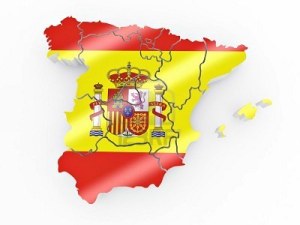 In Spain, it is now very easy to start a business. In fact, the government in recent years, have simplified the process. If you use an accounting firm, only 8 days are necessary for the creation of your business.
1. Obtaining the NIE
First, you must obtain a NIE, which is the tax identification number in Spain. The NIE will allow you to open a bank account, work and create a business. This number is obtained very quickly (the day of application).
 Start a business in Spain